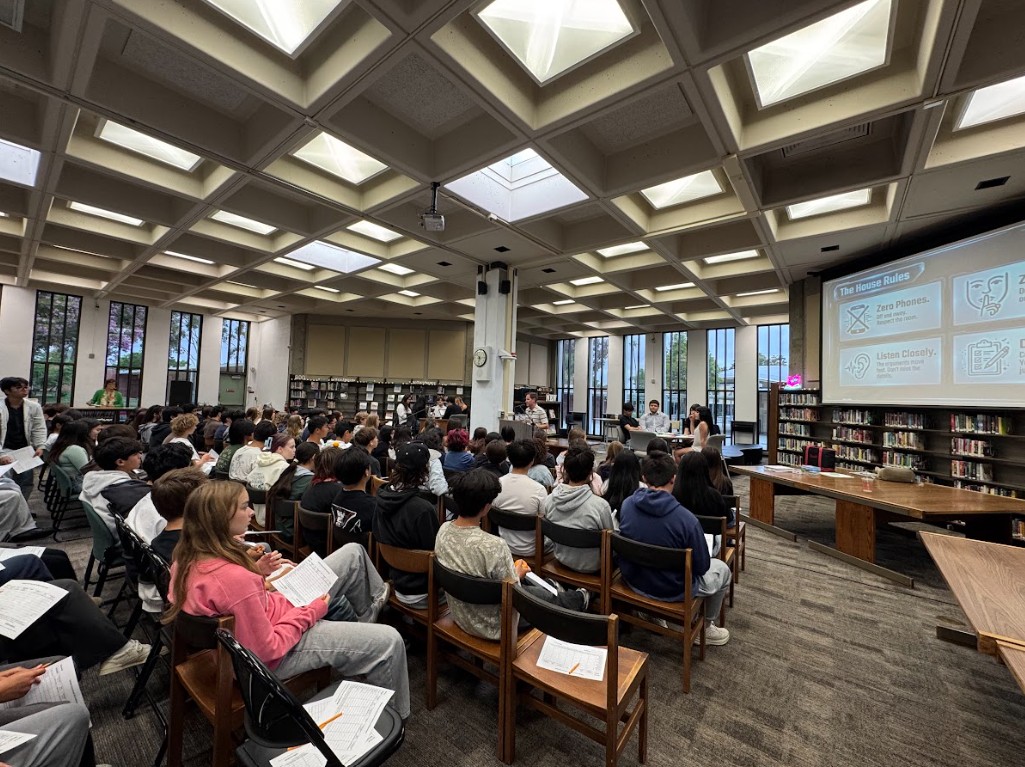
If you have seen large groups of students gathering in the library during classes over the last few weeks, you may have wondered about what kind of performance or activity was going on.
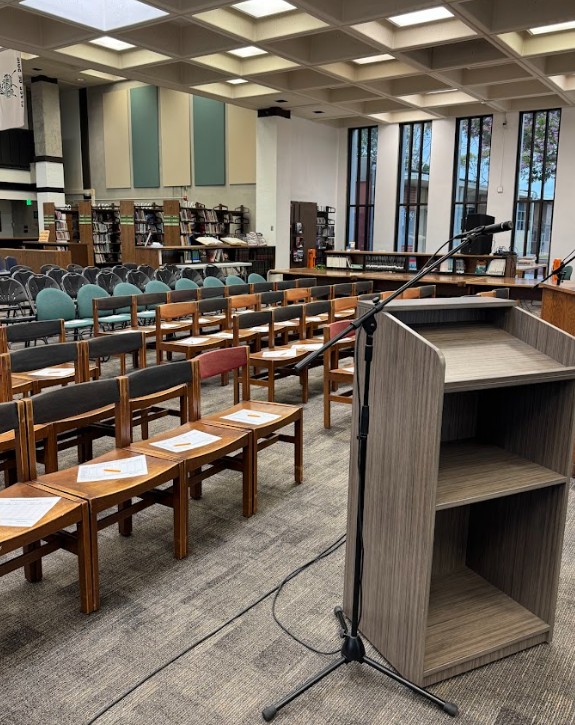
You might have seen the many chairs set up in an audience style, facing two official-looking podiums at the far side of the library. You also may have seen the well-dressed teams of 11th grade students conferring over note cards and computers as they took advantage of their prepared notes and “think time.”
All of this would be the culmination of months of training and curriculum development in the Advanced Placement Language course, led this year by Mr. Matthew Cowan.
It would also be the continuation of a grand tradition at Mesa…The Great Debates.
The History
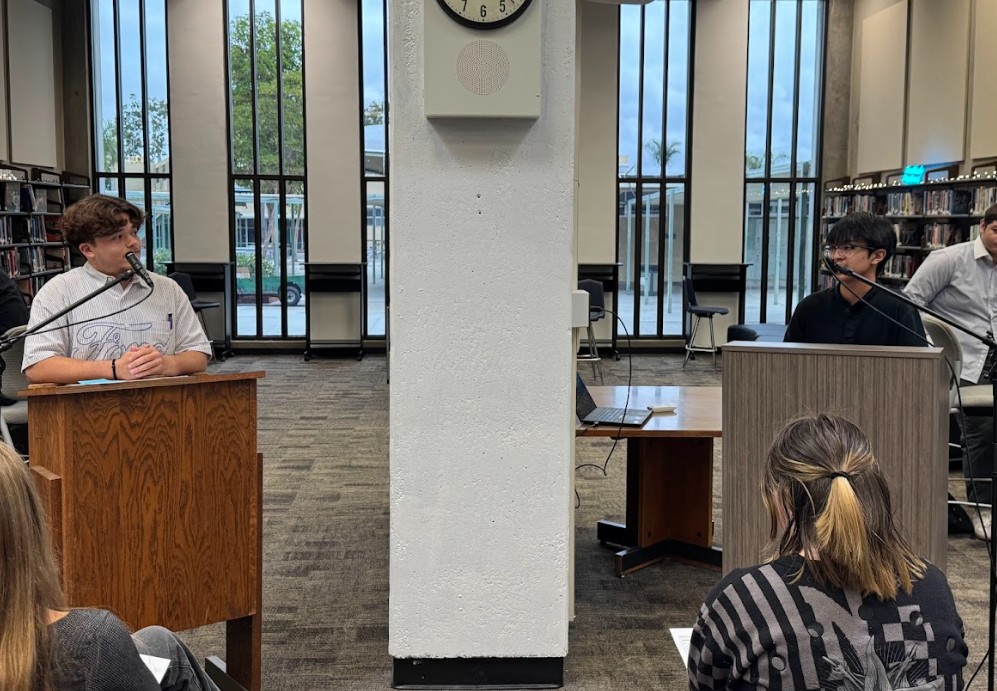
I’ve been here long enough to know that the debates started long ago, with a teacher who is now far, far away. Former Mesa teacher Mr. Siggy Abuel started the debates as the second semester final exam for his AP Language students way back in 2008, and it quickly became the stuff of legends…one of the assignments that both thrilled and terrified English students as they approached their junior year.
This was because of Mr. Abuel’s ingenious idea – why not have his students use all the wonderful rhetorical and logical writing and speaking tools they had been developing all year and participate in a full scale debate? Better yet, why not do it in front of an audience of their peers, who would then share the degree to which their opinions had been challenged or swayed as the result of his students’ efforts?
The Great Debates were born.
Part of what made the debates so legendary was that incoming juniors were able to watch them as audience members in their 9th and 10th grade years. They were able to watch as participating students were challenged and cross-examined. They were able to return with their teachers to their classrooms afterwards, buzzing with the “They should have said’s…” and the “What about’s…” that often result from such high level academic and theoretical conversations.
It became the kind of project that lived in infamy.
Mr. Friedmann Debates
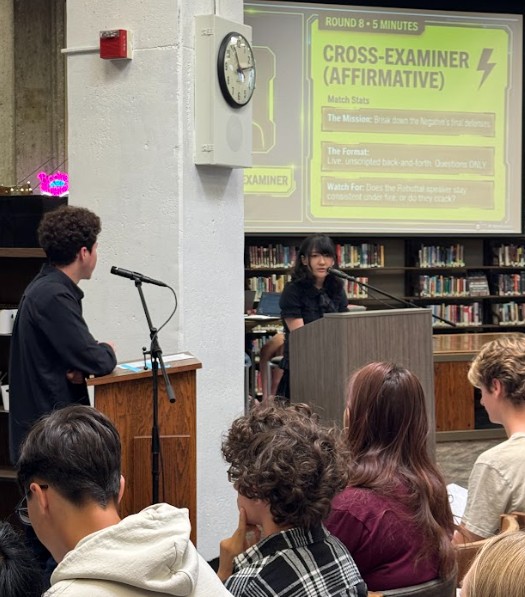
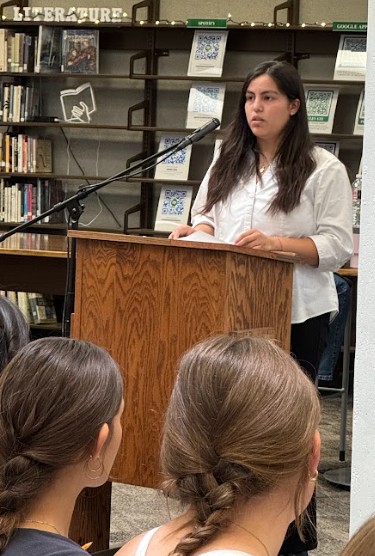
Costa Mesa High School alumni and current math teacher Royce Friedmann participated in the Great Debates as an AP Language student during the 2012-2013 school year. His topic was “Are humans inherently good or evil?” Of the experience, Mr. Friedmann said “I debated the side of humans being born good. I was told that my team was the first team to win while arguing the side of humans being good. I loved the experience; I was the team leader and got to do the concluding argument, and I can still remember the feeling of accomplishment I felt when I finished my speech and got a big applause. It was super rewarding, definitely a standout memory from high school.”
Mr. Friedmann shared that the debate topics under Mr. Abuel tended toward the philosophical, with timeless debates such as “Is there a moral truth?” and “Are humans inherently good?” He noted that “Now it seems they have more practical ‘of the times’ themes.”
Some of those themes certainly have been “of the times.” Recent years have seen teams debate such hot button topics as whether trans athletes should be able to participate in women’s sports and if there should be an age cap on the presidency of the United States, meaning that CMHS students have researched and debated the very same topics that have captivated and engrossed the country in recent years.
Passing the Baton
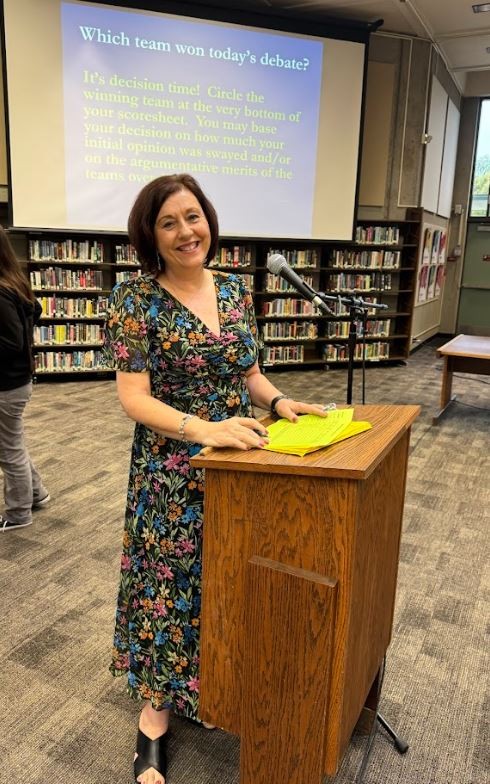
When Mr. Abuel moved from Mesa to the district in 2013, the AP Language course passed to Mr. Chris Davis, who continued the debate tradition. During that transition year, Mr. Abuel was so dedicated to the continuance of the project that he met with and coached 11th grade AP Language debate teams who were willing to travel to the district office!
The following year the course moved to Mrs. Michelle Lindfors, who taught the course from 2014 until her retirement in May of 2024.
During those 10 years, Mrs. Lindfors continued and developed the Great Debates, inviting hundreds and hundreds of students to witness her classes practicing rhetorical strategies such as concession, rebuttal, deductive reasoning, parallelism, and tone.
She coached and prepared students both eager and reluctant, and was able to build real world skills in public speaking, active listening, collaboration, research, and persuasion.
And watching them was also a heck of a good time.
Mrs. Lindfors Remembers
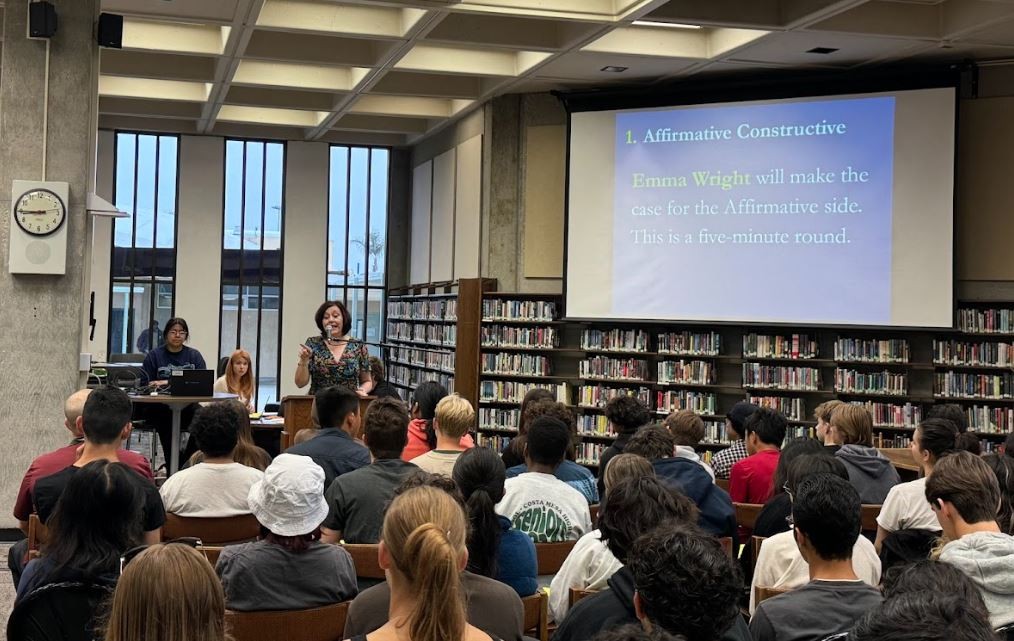
When reached for comment about highlights of debates past, here are moments that Mrs. Lindfors shared.
“My happiest debate moment was when an EL student from Syria told me he could not do the debates. He then worked tirelessly with me and his captain and was a fantastic cross examiner, and his team won. He, his team captain, and I burst into tears after his debate. It was a real triumph of hard work!”
“There was also a very stirring debate one year about whether high school students should evaluate their teachers and have those evaluations matter to the careers of the teachers.”
Speaking as a frequent viewer of Mrs. Lindfors’s class debates, what always stood out to me was how seriously everyone (participants and audience) was taking it. It was the kind of environment where you felt like something real, and authentic, and important was happening.
Q&A With Mr. Cowan, Current AP Lang Teacher
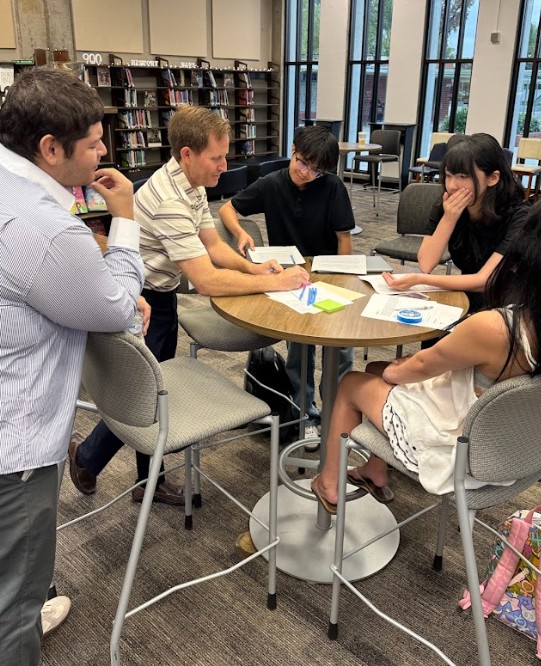
Hitching Post: How did students prepare for the debates?
Mr. Cowan: Students received structured work time where they divided and conquered their roles. I also provided calibration time as well as time to research their topics and view award winning debates done by other classes & schools.
Hitching Post: Why do you feel like it was a worthwhile educational experience?
Mr. Cowan: There is so much wrapped up into these debates. Public speaking skills…check. The ability to see things from multiple points of view….check. Thinking critically in real time….check. So, so much more.
Hitching Post: What was your favorite part of witnessing/leading this Mesa academic tradition?
Mr. Cowan: Witnessing students who believed that they COULD NOT DO this, be successful. Full stop.
The Audience
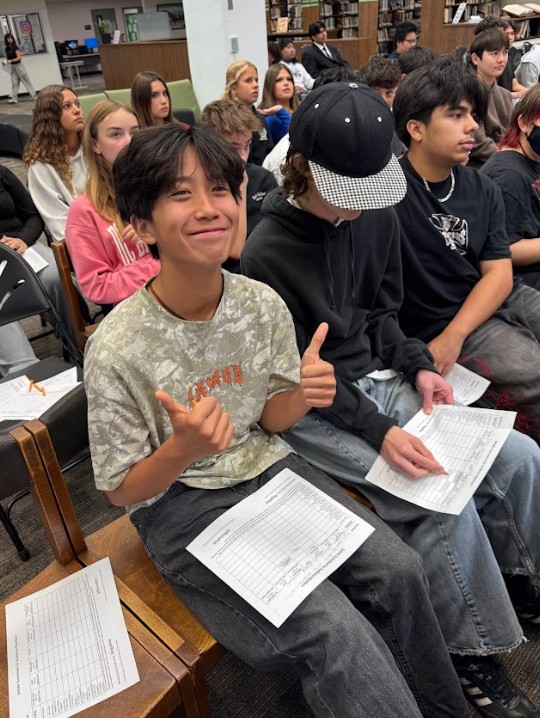
Many teachers have brought classes to witness the debates over the years. For the 12th grade AP Literature classes, it is fun to look back on the same project they had to complete the previous year, or to watch younger siblings and friends participate. For 9th and 10th grade Honors English classes, teachers can prime students for what is to come.
Other classes may find touchstones to their own curriculum within the debate performances.
Mrs. Sarah Portwood has been bringing classes to the debates since they resumed after the 2020 Covid pandemic. She noted “From a drama standpoint, we enjoy making observations about the public speaking skills of the debaters. After the debate our class discusses how well we could understand each person and how engaging a speaker they were. Could they have looked up more? Did they use inflection or was their speech monotone? We discuss how being engaging may affect the outcome of the debate. If students tune out because the speaker is boring or inaudible, their points are being lost on the audience. It is my hope that by watching these debate “performances” the students can apply the praise or criticism they have of the speakers back to their own craft.”
Other courses, such as Psychology, Art, and History, and even PE have found their own connections to the topics and ideas presented within the debates.
Mrs. Kelly DeBusk said “I think it’s a worthwhile use of class time because students get to learn about an interesting topic, hear opposing views, and then make their own informed decision. It’s also a great way for students to be exposed to a class they may want to take. I think the students gain insight on topics they may have never thought about as well as how to debate in a respectful way.”
She has been bringing classes to the debates since they were first opened up to audiences in 2008. She added, “When I think of the debates at Mesa, I think of Michelle Lindfors.”
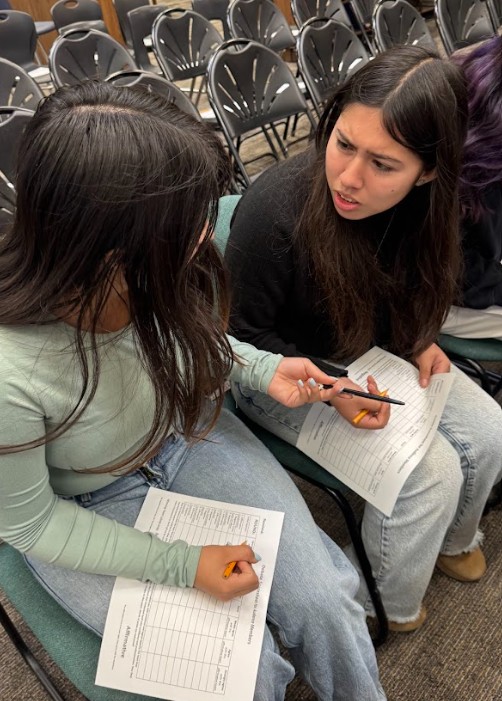
The 2026 Topics
The topics that the students have chosen for this year’s head to head challenges are:
Wednesday, 4/29
- Period 4 – Social media companies/platforms should be required to verify the age of its users
Tuesday, 5/19
- Period 3 – The Government should require education for soon to be (prospective) parents
- Period 5 – The internet has made the public less informed
Tuesday, 5/26
- Period 3 – Societies should hold professional athletes and/or celebrities to higher standards of personal conduct
- Period 5 – Incarcerated (jailed) persons should retain the right to vote in a democratic society
Wednesday, 5/27
- Period 4 – A.I. is more beneficial than harmful to society at large
Thursday, 5/28
- Period 3 – The age of adulthood should be raised from 18 to 21
- Period 5 – Social media has a negative role on teenage social relationships
Friday, 5/29
- Period 4 – Parents should have the right to opt their students out of sex education
The Future
With everything else that’s changed (cell phones, social media, AI…), it’s hard to believe there are any projects that have held on for almost 20 years across five different educators, but this one has.
Maybe that’s because it has all the hallmarks of what makes education great. It is the ultimate group project. It requires research, hard work, preparation, speaking and listening skills, and a little bit of style. They are fun to watch and exciting (terrifying?) to participate in. Like live theater, a debate is a creature of the moment. It exists in real time, and then it is gone, unscripted and unrepeatable. There is no safety net, no second takes, and when it is over, the audience is left to grapple with their own ideas and assumptions.
It feels powerful, so we lean in. The moment demands our full attention, not because a teacher is calling for it, but because something real is happening in front of us and we know that soon it won’t be.
I thought you should know that those moments have been going on for a long time, affecting a lot of people. And I hope they keep going.