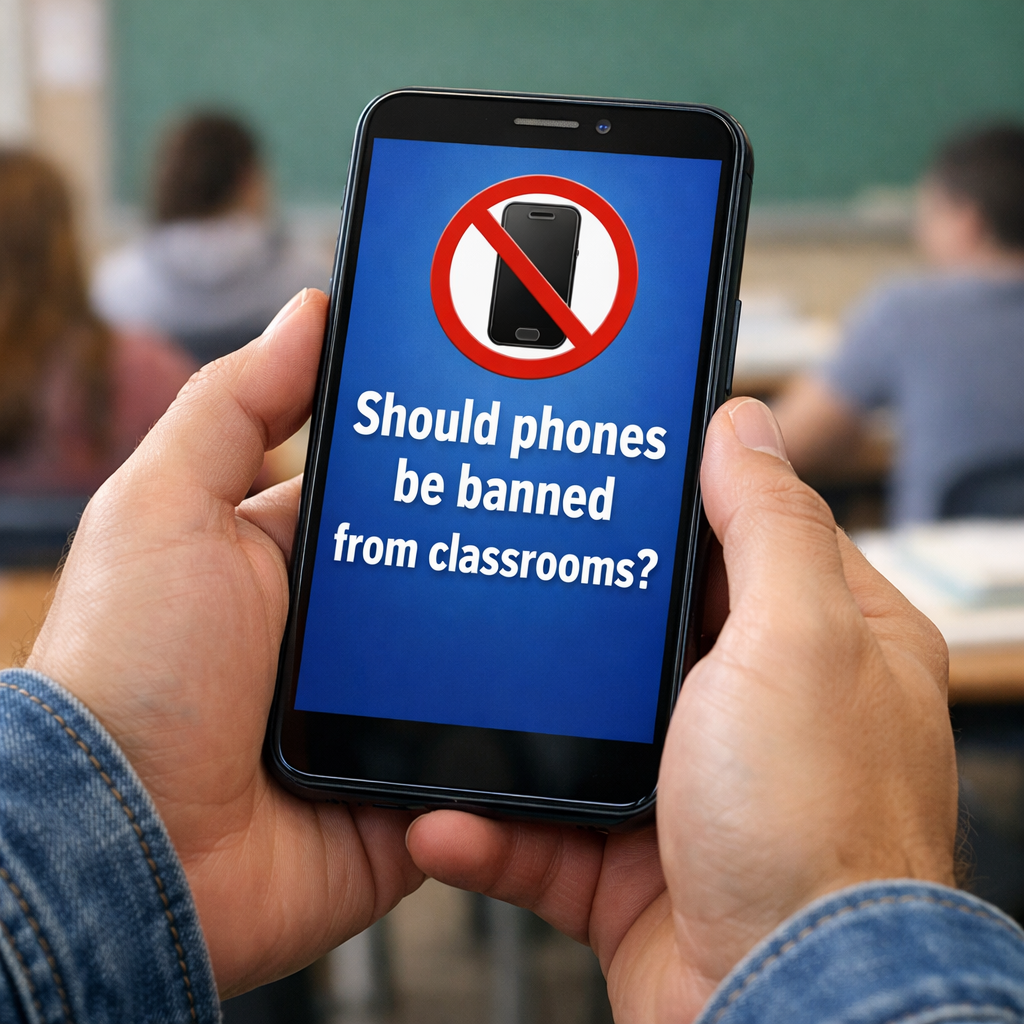
The most heated debate of all time is if phones should be banned in classrooms.
Some people say it would probably have a good impact on the student grades, like fewer distractions. A student might want to check their phone when they get a notification. It would make a student focus better. Also more classroom engagement. Students nowadays are quiet and don’t interact with each other as much. They tend to be by themselves. Also, less cheating; nowadays students use ChatGPT and other types of AI sources for homework, tests, and more. Smartphones contain cyberbullying, which can be harmful. It could cause emotional damage to students and negative thoughts. Reducing cyberbullying might make people feel happier and safer. There are a lot of studies that say that kids do work better without phones.
Knowledge at Wharton Did research and they found that there were fewer distractions and more social behavior and happier teachers. Students do much better without phones. They saw that students’ grades improved. “The more kids interact with their phones, the less they interact with each other and the world around them. In the survey, teachers and principals reported that all-day cell phone bans brought positive changes, including kids making more eye contact and conversation, especially during recess and lunch times.”
But others say no, phones shouldn’t be banned. Some argue, what happens if there were an emergency and a student needed to get in contact with a parent or guardian? There are also studies that say phones shouldn’t be banned from classrooms.
EducationWeek in their article “Why Cellphone Bans Are a Bad Idea” did some research, and they say that phones could be a good learning tool, like with AI and different resources, and could be helpful to students of different skill levels. The article says, “The reality of today’s classrooms is that students are accustomed to having their phones around—and they have been conditioned to engage fluently with technology. For many kids, especially in districts that lack resources to provide alternative devices to students, the phone serves as a calculator, translator, mini-computer, and a door to information.”
Teachers might spend more time on policing phone activity instead of teaching. Students rely on phones in everyday life for communication, learning, and problem-solving.
CMHS Responses
To better understand this debate, I asked students at CMHS for their perspectives. This is what they had to say.
9th grader Amy Sandoval responded: “I firmly believe that phones should be allowed in class for safety reasons. Besides that, I think we should grant phone privileges for classwork that can be completed early or for completing all the necessary work. However, most students have valid reasons for having their phones, such as using them as a safety measure or staying in touch with their parents. Therefore, I believe phones should not be banned.”
9th grader Ashley Mejia responded: “I think phones should be allowed in classrooms, but only after people get their work done so they have something to work towards.”
9th grader Olivia Soto: “I think that they shouldn’t be banned, but I think they should only be allowed when you have finished your work to promote students to actually do it and encourage them so they get free time at the end of class so not only it’s helping both students and teachers.”
9th grader Danna Acevedo: “I think that phones shouldn’t be banned in classrooms, but students shouldn’t be using them during class when their teacher is giving a lesson. I think that they should only be able to use them after they are finished with work or if it’s an emergency.”
9th grader Michelle Xahuentitla: “No, I don’t think phones should be banned because what if an emergency happens and you need your phone and like, your teacher can’t help you.”
Beloved CMHS teacher Mrs. Kahawai says: “I appreciate all the students who feel so strongly about the need for their phone to support them in an emergency, but the National School Safety Organization actually found that student cell phones can HINDER emergency response teams by spreading misinformation, causing panic, overloading networks, and distracting from safety protocols. The fact is that 99.9% of the time you are using your phone in class, you are using it as a distraction from learning or from socializing in positive ways with your peers, and not to help with your school work or to connect you with people.”
Using the statements based on multiple people, in conclusion, I believe that phones should not be banned from classrooms, but they are beneficial if an emergency were to occur. Other than that, phones should be used after work is completed fully and with effort.