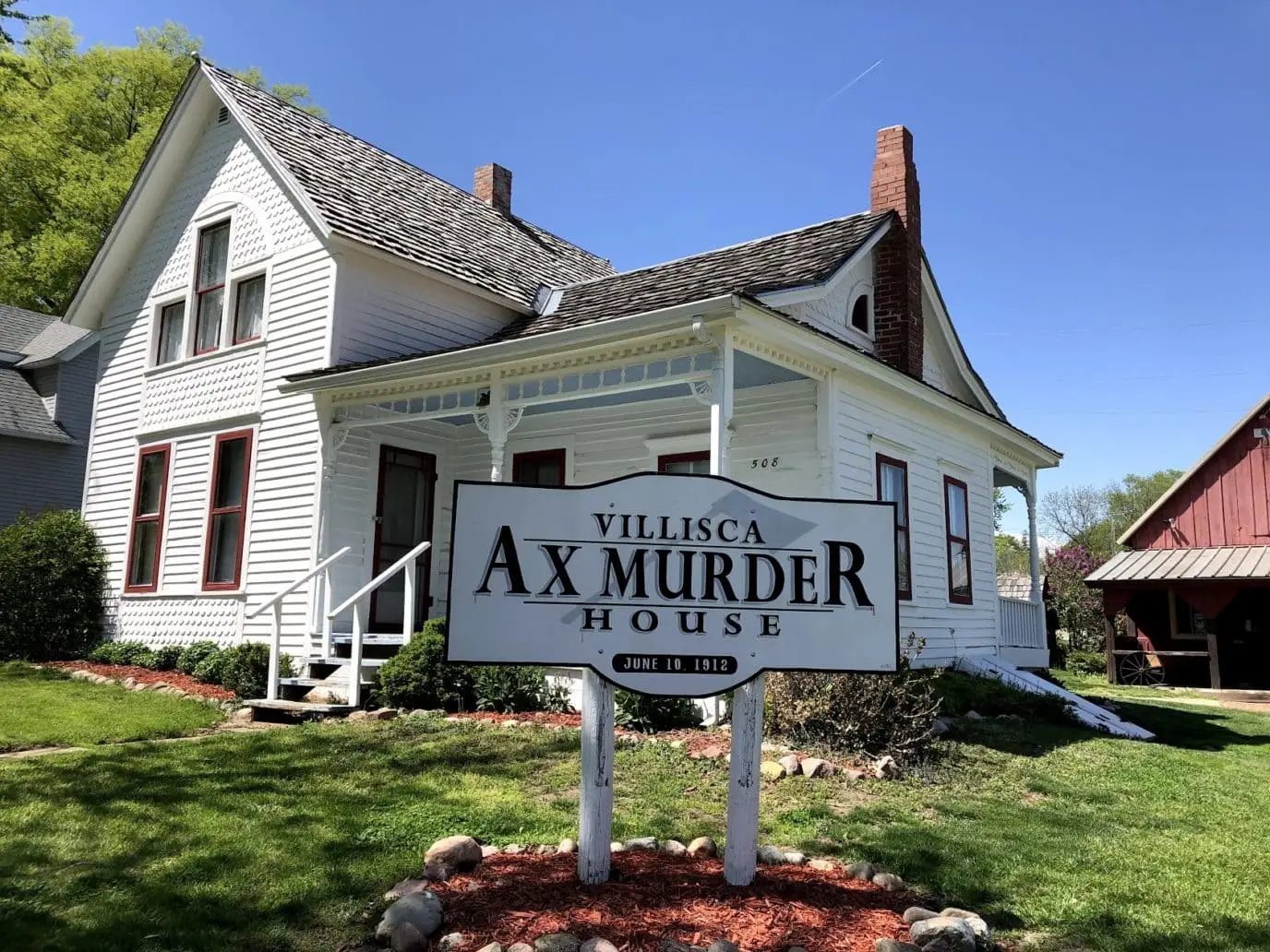
In the quiet farming town of Villisca, Iowa, a tragedy occurred that would haunt the community for generations. On the night of June 9, 1912, eight people were killed inside a small family home. The victims included a married couple, their four children, and two young girls who had been invited over for a sleepover.
What made the case particularly disturbing was that there were no obvious signs of a break-in, no confirmed witnesses, and no clear explanation for why anyone would target the family. The front door was found unlocked. The person responsible was never convicted, despite years of investigations, multiple suspects, and two separate murder trials.
Today, the home is known as the Villisca Axe Murder House. More than a century later, people are still fascinated by the case, and the identity of the killer remains one of Iowa’s greatest historical mysteries.
The Moore Family
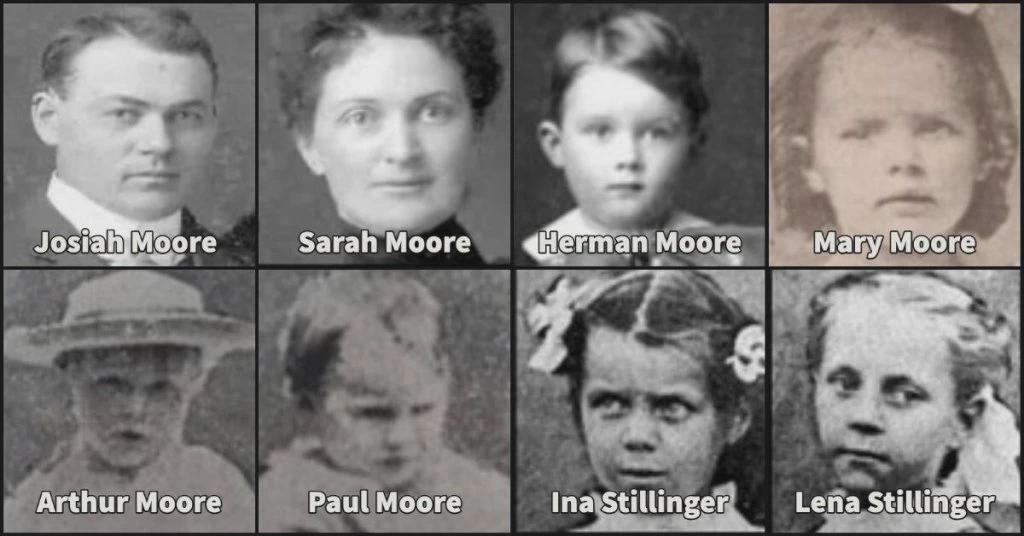
The house belonged to Josiah B. Moore, who was 43 years old, and his wife, Sarah Moore, who was 39. Josiah was a successful local businessman who managed a John Deere dealership. The family was considered well-liked and financially comfortable within the community.
They had four children:
- Herman Moore, 11
- Mary Moore, 10
- Arthur Moore, 7
- Paul Moore, 5
The Moores lived a relatively ordinary life in their small Iowa town. Nothing about their family suggested that they would become the victims of one of America’s most infamous unsolved crimes. The family was also close with their neighbors, the Stillinger family. Their daughters, Lena, 12, and Ina, 8, were friends with the Moore children.
The Night of June 9, 1912
Sunday, June 9, 1912, began as an ordinary day for the Moore family.
That evening, the family attended a special Children’s Day program at their Presbyterian church. Sarah Moore had helped organize the event, and the children participated in the celebration. The Stillinger sisters, Lena and Ina, accompanied the family and were invited to spend the night at the Moore residence. The church program ended at approximately 9:30 p.m. Afterward, the families socialized before the Moores and the two girls walked home together. They arrived sometime between 9:45 and 10:00 p.m.
According to historical accounts, the evening had been pleasant. The children had enjoyed their church activities, and there was nothing unusual about their plans. Eventually, everyone settled in for the night. At some point between midnight and approximately 5:00 a.m., an unknown person or persons entered the house and killed all eight occupants. Investigators believed the attacks began in the parents’ bedroom before moving upstairs to the children’s bedrooms and finally downstairs to the guest bedroom where Lena and Ina were sleeping. The exact sequence of events has never been established with certainty.
The Discovery of the Murders
The following morning, June 10, 1912, the house was unusually quiet.
A neighbor named Mary Peckham became concerned because the Moore family had not come outside to complete their usual morning activities. She went to check on the family, knocked on the door, and received no response. After attempting to get someone’s attention, she contacted Ross Moore, Josiah’s brother. Ross arrived at the house and eventually used his key to enter.
When he began looking through the residence, he discovered the two Stillinger sisters in the guest bedroom. He immediately realized something was terribly wrong and instructed Peckham to contact the town marshal, Henry Horton. When Marshal Horton arrived, he searched the residence and discovered that all eight people inside had been killed.
The entire Moore family and both visiting girls were dead.
The discovery devastated the small community. It was difficult for residents to understand how something so terrible could happen in a town where people generally knew one another.
The Strange Details Inside the House
When investigators examined the residence, they noticed several unusual details.
One of the most significant discoveries was that the murder weapon had been left inside the house. It was an axe belonging to Josiah Moore, which investigators believed had been taken from the family’s property.
The weapon was found in the downstairs guest bedroom. Investigators also discovered that mirrors and the glass in the entry doors had been covered with clothing and fabric. Curtains throughout the home had been drawn, leaving the rooms dark. There were also reports of a plate of uneaten food and a bowl of bloody water inside the residence.
These details created additional questions.
Why had the killer covered the mirrors? Why had the person remained inside the home after the murders? Was the killer attempting to hide something, or were these actions part of a ritual or personal behavior? No explanation has ever been proven. Another particularly troubling detail was that investigators believed one of the visiting girls, Lena Stillinger, may have awakened during the attack and attempted to defend herself. This suggested that at least one of the victims may have been aware of what was happening.
The Investigation and Its Major Mistakes
The investigation began almost immediately, but several serious mistakes made it difficult to preserve evidence.
At the time, modern crime-scene investigation techniques were not available. However, even by the standards of 1912, the handling of the residence was heavily criticized. One of the biggest problems was that people were allowed to enter the home before it was properly secured. According to historical accounts, dozens of curious residents and spectators walked through the house. Some even handled the murder weapon. This meant that important evidence could have been disturbed, moved, or contaminated. The coroner also failed to properly document certain details about the victims and the original condition of the scene. Investigators attempted to use bloodhounds to follow a scent, but the trail eventually disappeared near a river fork south of town. Search parties also examined the surrounding countryside, hoping to find someone who might have been connected to the crime.
Unfortunately, none of these efforts identified the killer.
The investigation became increasingly complicated as different detectives developed competing theories.
The Major Suspects
Over the years, several individuals became connected to the investigation. However, it is important to understand that none of the following people was convicted of the Villisca murders.
1. Frank F. Jones
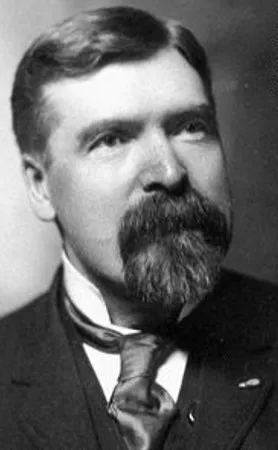
Frank F. Jones was one of the most controversial names connected to the case.
He was a wealthy businessman, former employer of Josiah Moore, and an Iowa state senator. Moore had previously worked for Jones but eventually left to establish his own competing business. This created tension between the two men. There were also rumors that Moore had been involved in an affair with Jones’s daughter-in-law, further damaging their relationship. In 1916, private detective James Wilkerson accused Jones of arranging the murders. The theory suggested that Jones had hired another man to kill Moore and his family because of their business and personal conflicts. Jones strongly denied the accusations. He eventually sued Wilkerson for libel but lost the case. A later grand jury investigation found no evidence establishing Jones’s involvement.
Despite the accusations, Jones was never convicted or officially proven to have participated in the murders.
2. William Mansfield
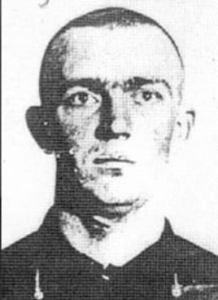
William Mansfield became a suspect through the investigation conducted by James Wilkerson.
Mansfield had previously been connected to another family murder case in Illinois, which made him a person of interest. Wilkerson believed Mansfield was the person hired by Jones to carry out the Villisca murders. However, investigators discovered evidence that Mansfield had been working several hundred miles away in Illinois when the Villisca murders occurred. Payroll records supported his alibi. A grand jury refused to indict him, and he was released.
3. Reverend George Kelly
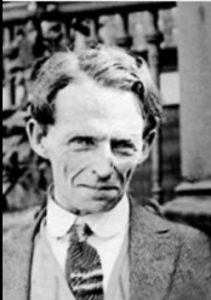
Perhaps the most fascinating suspect was Reverend George Kelly. Kelly was a traveling minister who had visited Villisca around the time of the murders. He had participated in the Children’s Day church activities attended by the Moore family. What made Kelly suspicious to investigators was his unusual interest in the murders.
After leaving Villisca, he reportedly sent numerous letters to investigators and people connected to the victims, asking questions and discussing the crime. His behavior eventually attracted attention. Kelly also made statements suggesting that he knew more about the murders than an ordinary person would. In 1917, he was arrested and accused of committing the killings. During questioning, Kelly provided a confession claiming that he had entered the Moore residence and carried out the murders because he believed God had instructed him to do so.
However, his confession was later withdrawn. The first trial ended with a divided jury. Eleven jurors favored acquittal, while one believed he should be found guilty by reason of insanity. A second trial was held later in 1917. This time, the jury found Kelly not guilty after approximately five hours of deliberation.
He was never convicted of the murders.
4. Henry Lee Moore
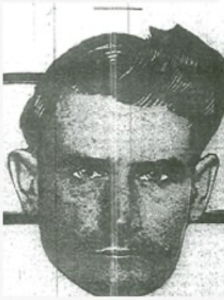
Another individual investigated was Henry Lee Moore, who was not related to the Moore family. He had been convicted of separate axe murders involving his own family members. Because of the similarities between those crimes and the Villisca murders, investigators considered whether he could have been responsible.
However, no conclusive evidence connected him to the Villisca crime.
5. Andrew Sawyer
Andrew Sawyer was another suspicious individual whose name appeared during the investigation. A railroad worker reported encountering Sawyer shortly after the murders were discovered. Sawyer reportedly displayed unusual interest in the case and spoke about the possibility of being suspected. However, investigators eventually established that Sawyer had been in Osceola, Iowa, on the night of the murders. His whereabouts were supported by information from local authorities, and he was dismissed as a suspect.
The Funerals
On June 12, 1912, the funerals for the eight victims were held in Villisca. The tragedy had attracted attention far beyond the small community. Thousands of people reportedly attended the funeral services. The victims’ caskets were placed inside the local firehouse, and National Guardsmen helped control the crowds. The funeral procession was approximately 50 carriages long. The loss of six children made the tragedy particularly heartbreaking for residents. Many people struggled to understand how an entire family could be taken from their community in a single night. The eight victims were eventually buried in Villisca Cemetery. Despite the funeral and the community’s attempts to move forward, the investigation continued.
Why Was the Case Never Solved?
There are several reasons why the Villisca murders remain unsolved.
First, the crime scene was not properly preserved. Too many people entered the house before investigators could secure it. Second, forensic technology was extremely limited in 1912. Investigators did not have access to modern DNA testing or the advanced evidence-analysis methods available today. Third, the investigation became divided between competing theories. Some investigators believed the murders were connected to personal revenge, while others believed the killer could have been a traveling stranger. The different theories created confusion, and no single explanation could be proven. Although Reverend Kelly was tried twice, he was acquitted. Other suspects were investigated but never convicted.
Eventually, the official attempts to prosecute someone for the murders came to an end.
What Happened to the House?
The house at 508 East Second Street in Villisca still stands today.
Over the decades, the property changed ownership several times. Eventually, it became known as the Villisca Axe Murder House and was restored to resemble its appearance around the time of the murders. The home was added to the National Register of Historic Places in 1998.
It later became a destination for people interested in the history of the murders and paranormal investigations. Visitors have reported unusual experiences, unexplained sounds, and feelings of being watched. Some claim to have heard children’s voices or experienced strange activity inside the home. However, these stories are personal reports and have not been scientifically established as evidence of paranormal activity. The murders themselves are historically documented, but claims that the house is haunted remain unproven.
The Mystery That Remains
More than 114 years have passed since the night of June 9, 1912.
The Moore family and the Stillinger sisters were never given justice through a criminal conviction. No one has ever been definitively identified as the person responsible. The case remains disturbing not only because of the number of victims but also because of how ordinary the evening had seemed. Eight people went to bed expecting another normal day in their small Iowa town. By the following morning, all eight were dead. The investigation produced multiple suspects, conflicting theories, a controversial confession, and two murder trials, but no final answer. The Villisca Axe Murder House continues to stand as a reminder of one of America’s most infamous unsolved crimes. And perhaps the most unsettling part of the entire story is that the person responsible may have lived the rest of their life without ever being caught.
To this day, nobody knows for certain who entered the Moore home that night, why the family was targeted, or what truly happened inside the house.