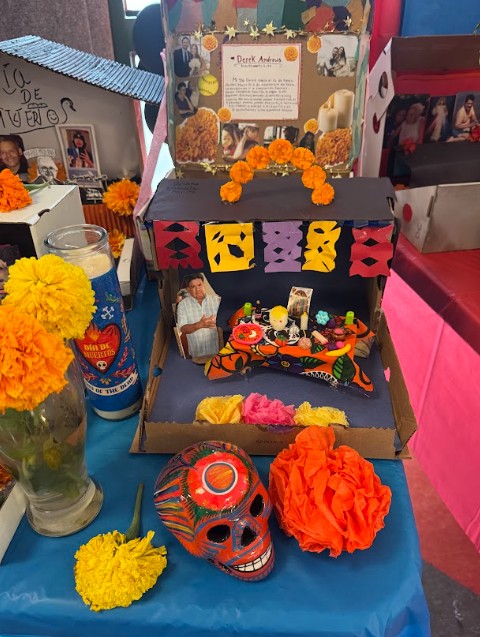
Is Día de los Muertos the Mexican Halloween? Many people think so, but it isn’t. Día de los Muertos is a Mexican holiday that celebrates the lives of one’s loved ones who have died. It is on November 1 and 2, and before then, families start cleaning their houses and getting ready. They celebrate their loved ones by making an ofrenda, providing their favorite foods, and more.
Unlike Halloween, this holiday is about the remembrance of loved ones and keeping their memory alive by celebrating them, honoring what they loved when they were still with us, and getting together with others to celebrate life. Día de los Muertos is a beautiful celebration and tradition that gathers everyone together no matter their religion, race, or who they are. Everyone comes together for the same reason: remembering their loved ones.
The holiday began thousands of years ago when Indigenous people such as Aztecs, Maya, and Nahua would have multiday festivals honoring the dead and viewing death as a natural, continuing part of life rather than “the end.” When the Spanish arrived, the traditions combined with Catholic holidays. The dates now line up with All Saints’ Day on Nov. 1 and All Souls’ Day on Nov. 2. The holiday was not celebrated publicly in the United States until the 1970s, when artists in East Los Angeles held community celebrations during the Chicano Movement. Today, the holiday is celebrated worldwide. Every year on Nov. 1 and 2, people celebrate Día de los Muertos.
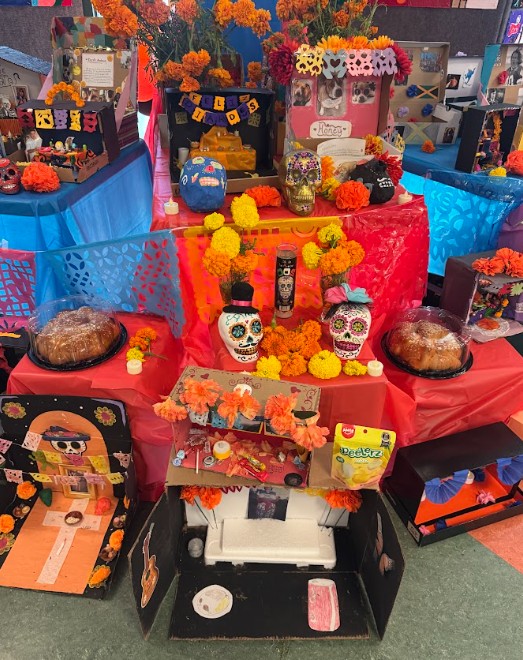
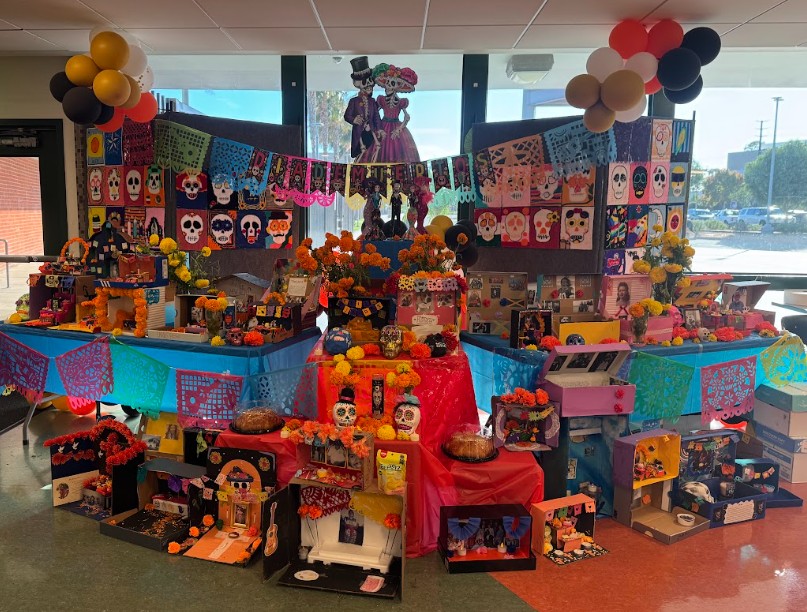
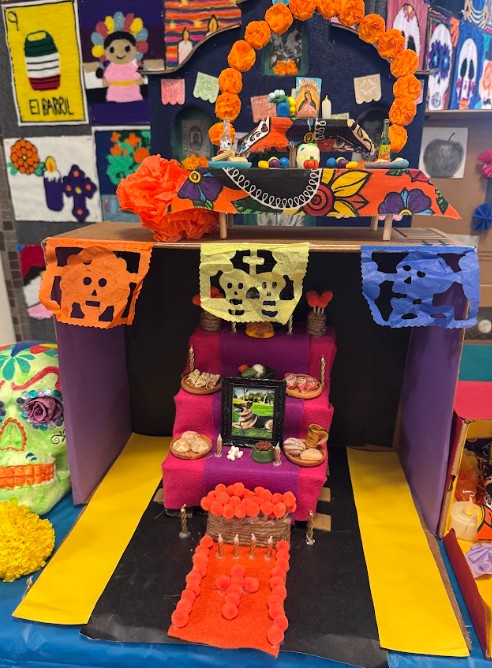
The most important tradition is the ofrenda, an altar that families put up with everything their loved ones loved while they were still with us. It includes a picture of them, their favorite foods and snacks, favorite drinks, and other stuff like cempasúchil. Cempasúchil, or marigolds, are used to make a pathway to help guide the dead to their loved ones with their bright colors and strong smell. Sugar skulls are used as a symbolic representation of those who are not here. Skulls often have a name written on the forehead so each spirit knows and can feel welcomed. Usually, smaller skulls are used to represent kids (angelitos), and bigger skulls are used for adults. Finally, there is pan de muerto, or bread of the dead. It is my favorite tradition of the altar. It is an offering to welcome the spirits and to feed them after their long journey.
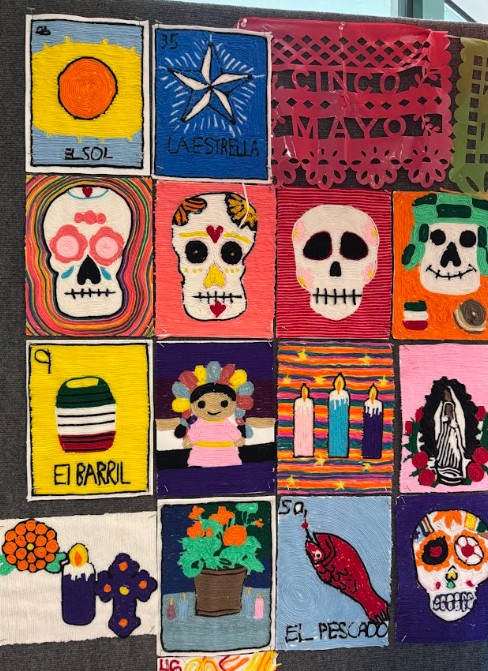
This year, Costa Mesa High School is honoring the holiday by having an after-school event, putting decorations all over campus, and having students make something having to do with Día de los Muertos. Some students are making drawings of skulls to represent sugar skulls, and other students are making homemade ofrendas of loved ones who have passed. These will be displayed in the front office along with other decorations. The after-school event took place November 3 from 4 to 5 p.m. at the Middle School Enclave. Our wonderful foreign language department hosted, and there was all types of games, food, and other stuff to do there.
Hitching Post: What does Día de los Muertos mean to you personally?
Ms. Crisantos, a Spanish teacher here at Costa Mesa: “El Día de los Muertos for me is a beautiful Mexican tradition that reminds me of the importance of family, love, and remembering those who are no longer physically with us but that will be forever in our hearts. As a Mexican American, it is a meaningful part of my cultural heritage because it is a time we honor our loved ones, celebrate their lives, and we keep their memories alive through stories, their photographs, their favorite food, and music. For me, it is not a sad time about death but about celebrating life, sharing all the precious moments we had with those no longer with us and the love that continues even after they are gone.”
Hitching Post: Why is it important for our school to celebrate it?
Ms. Crisantos: “As an educator, I believe our schools should be places where every student feels seen, valued, and proud of their cultural identity. Celebrating Día de los Muertos allows our Latino students to see their heritage represented and appreciated in their schools while giving students from other backgrounds an opportunity to learn about and respect different traditions. It creates a sense of belonging, strengthens our school community, and reminds us that diversity is something beautiful that brings us together.”
Hitching Post: What do you hope students will learn?
Ms. Crisantos: “Students understand that El Día de los Muertos is not a scary or sad occasion, but a beautiful celebration of love, family, remembrance, and cultural pride. Beginning with remembering our beloved pets on October 28 and honoring our loved ones on November 1 and 2, this tradition reminds us of the importance of keeping their memories alive. Most importantly, I hope students learn to appreciate their own heritage, respect other cultures, and recognize that although our traditions may differ, the love we have for our families connects us all.”
The movie Coco has also helped lots of people, not only students, realize the beauty and importance of this holiday. It shaped people’s view of it by showing it is not a scary holiday but a holiday that brings everyone together to celebrate everybody’s loved ones.
This year, as the ofrenda fills with photos and flowers, students will remember that this isn’t a scary holiday, but a beautiful and sacred one. It is a holiday to remember your loved ones and to honor them by putting up their ofrenda.