Introduction
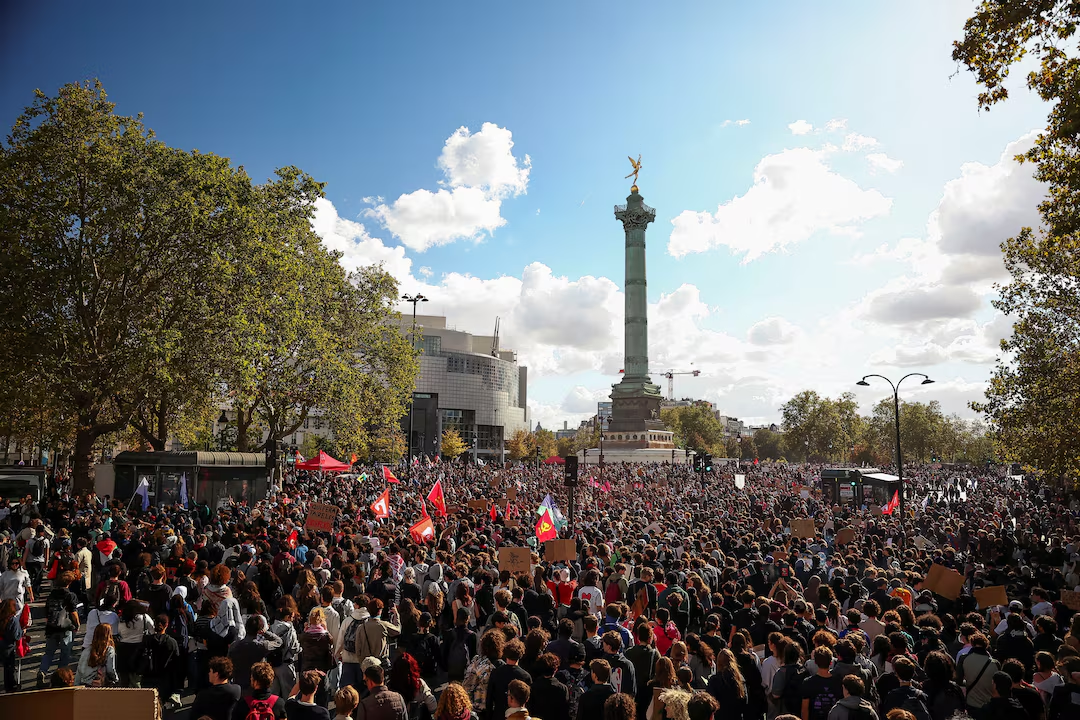
France is rippling with protests as it’s estimated that over 500 more schools will close or are closed as High School students across the country block them off. Students protest across the country and throughout cities as the protests turn more into violent riots. Entire schools and other buildings have been lit on fire and critics have started to question the protests, citing how it helps to burn the very thing they want fixed.
France’s Schools
Nearly 10% of all teaching hours are unstaffed in classrooms. Additionally, classrooms that normally hold 20-25 students are not being overwhelmed with 35-40 students each, further staining the time for individualized instruction each student can receive. Classrooms are also reportedly reaching temperatures of around 40°C (104°F), making it impossible for most to learn.
Why French High Schoolers Are Protesting and Why Their Movement is Already Historic
High School Students Movement Protests Grow and Draw Widespread Support
Across France, almost ¼ of all schools have been affected by these protests, or 1000 schools, a massive increase from the first week’s 180. Hundreds of teachers and staff have been injured by these protests, seriously undermining the protests.
France’s Growing Financial Problem
France’s debt becomes a new record as it breaks approximately $3.5 trillion dollars. The national debt is expected to grow to nearly 122% of GDP, creating a new record for the country. This has become a focal point for these protests, as parts of the government’s planned budget cuts impact school funding.
From School Blockades to Violence: What is Driving Student Protests in France
France Economy Presidential Election Record Debt
How the Protests are Unfolding
Across the country, students have been moving trash cans into entrances of schools to prevent normal access. Protestors hold up signs and chant slogans in city centers. In the protests that are more violent, all sorts of objects are thrown and fires have been set onto cars, buildings, etc.
High School Protests Draw Tens of Thousands Across France for Second Time in a Week
New universities have joined in protest in addition to the high-school ones, broadening the protests into a wider movement for the overall education system in France.
The French government describes the protests as transitioning into “urban violence” and attempts to destroy public school infrastructure. Over 6,500 people have been arrested, or 390 per day on average. On September 29th, Tuesday, a 15-year-old boy had his hand and lower arm blown off after he tried to grab an anti-encirclement grenade. The day before, September 28th, a 14-year-old boy got hit by a tear grenade directly in the face. The officer was later charged due to the severity of the injury and the close range the grenade was fired, resulting in mutilation and/or permanent disability.
High School Protests: What We Know About Injuries Among Demonstrators and Police
High School Protests Spread Across France as Tensions Escalate
Where the Protests are Going and What it Has Accomplished
France’s Education Minister Édouard Geffray has promised a plan to deploy 3,000 qualified teachers and substitute teachers to over 500 critically-in-need schools. Questions have been raised, however, on it’s effectiveness, and reports state that only 35% of the substitute teachers have been deployed. Additionally, the government has created a new anonymous website for high school students to communicate issues, concerns, or comments directly to the government, with this form being open until October 23rd.
https://www.education.gouv.fr/construire-des-solutions-avec-les-lyceens-50614