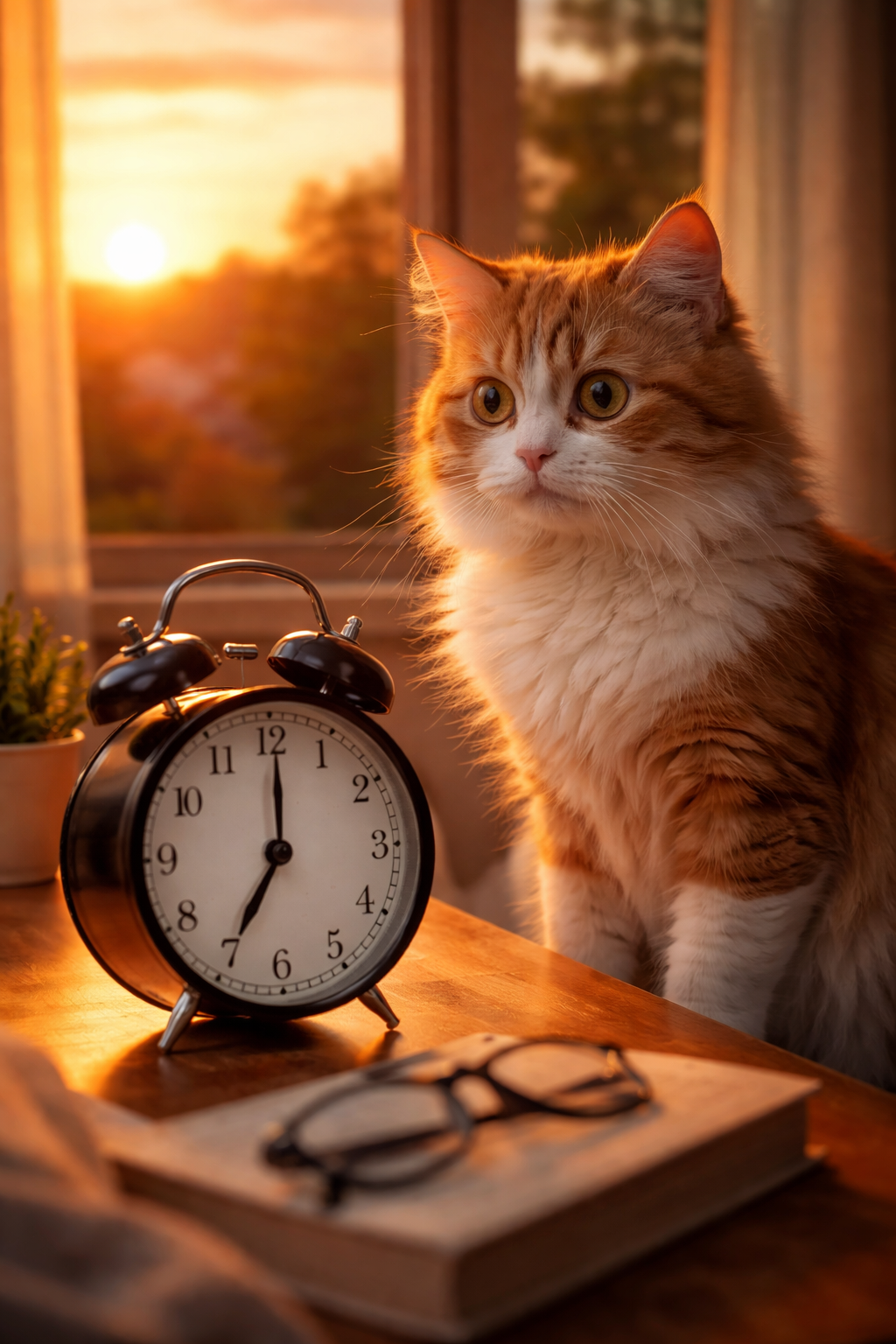
As you know we just had our time change, but have you asked yourself, who is really affected by daylight saving time? What most people would answer is humans, and that makes sense!
Most people in the U.S. have a love-hate relationship with the switch to daylight saving time (DST). On the one hand, we lose an hour of sleep, which can disrupt circadian rhythms, leaving us feeling groggy and even potentially leading to deeper health issues. On the other hand, though, it also means longer, sunnier evenings and more daytime for outdoor activities.
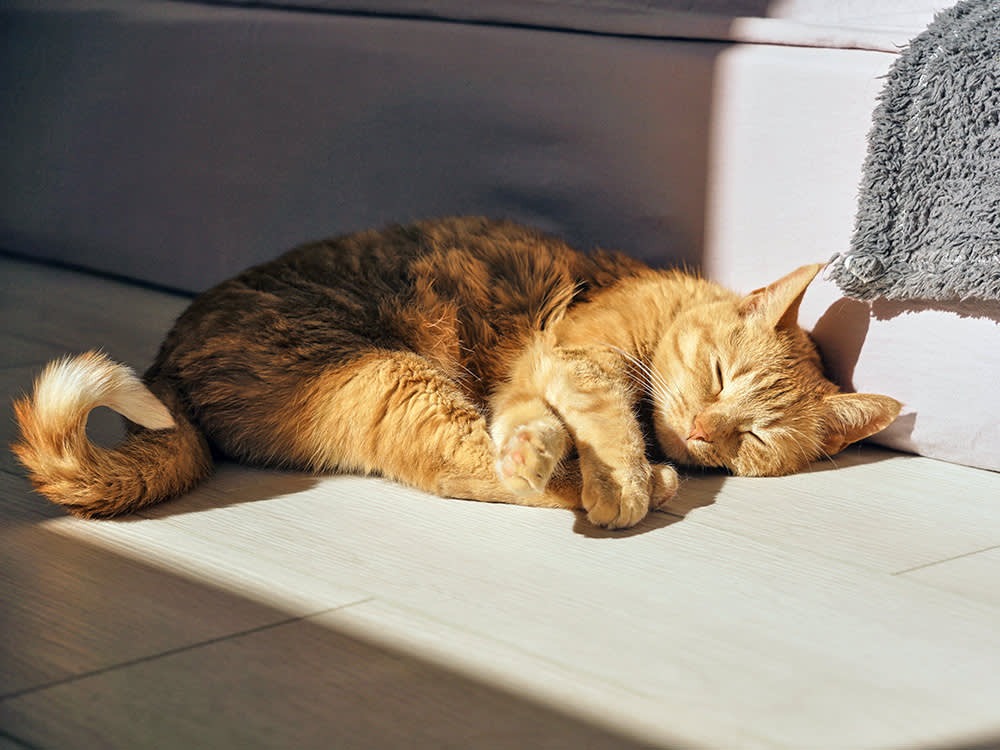
But what about our pets? Pets can be affected by the time change when it happens. Why? It’s mainly due to them having internal clocks, telling them when to do something. Basically, they expect you to be where their food bowl is by 10 AM, not 9. This can screw with them for a bit, but they are able to adapt.
Here are some common problems with time change you might see in cats:
- Increased vocalization: That classic, insistent meow for breakfast may start an hour earlier after the fall time change.
- Physical reminders: Some cats will weave between their pet parent’s legs, paw at their face or even start knocking things over to signal that a scheduled event, like feeding, has been missed.
- Changes in affection: A cat might seem extra clingy or, conversely, a bit grumpy as their sleep and social schedules are thrown out of whack.
On the other hand, dogs are more in a routine. When the schedule shifts, you may notice:
- Early morning wake-up calls: After we “fall back,” your dog’s internal alarm may still be set to the old time, meaning they’re ready to start their day an hour before you are.
- Mealtime anxiety: A dog used to eating at 5PM might start pacing, whining or staring at their food bowl around 4PM after we “spring forward.”
- Potty schedule disruptions: A dog accustomed to a 10PM potty break might have an accident or start pawing at the door if they have to wait until what feels like 11PM to them.
I personally have my cats and I didn’t see any changes from Sunday, March 8 until today. They really did not act all that differently due to the time change. Their stuff basically stayed the exact same, no difference at all. I’d say that it was rather nice! Cats are also creatures of habit, and their protests can be just as clear.
In conclusion, my routine for my cats wouldn’t really change, it’d stay the exact same, they didn’t care about the time change and basically stayed the same, or maybe I did not notice any of their behavior changes. I cant image them having any of the behavior mention on top. I am really relieved.
What I’m trying to say is that nothing would be different, but patience makes perfect.
While daylight saving can disrupt your pet’s inner rhythm, it’s a temporary issue. Their internal clocks are real, and their confused behaviors are a biological response. By planning ahead with a gradual schedule shift and offering a little extra patience, you can help make the transition smooth and stress-free. I guess not all pets are like mine.